Digitising Hotel Loyalty
programs with TLC
TLC / clubMarriott
Introduction
The TLC group designs and managed loyalty programs for most luxury hotels in India. It is a paid loyalty program that was primarily being run using a physical booklet and coupons. The objective was to transition from a physical booklet to a digital app to help users manage their memberships, avail various other benefits but most importantly enable the members to have more control in their hands. This would be a white labelled solution that could be scaled up to various hotel brand use-cases.
My Role
Research, User Testing, Product Design, Design System
Team
1 Design lead, 2 UX Designers, 1 Visual Designer, 1 Technology Lead, 4 Engineers
Agency
Moonraft Innovation Labs
“Membership engagement levels have been at the highest; coupon utilisation were up by 25% in the first 6 months after the app was launched for one of our hotel chains (compared to our physical vouchers) as the vouchers were directly in our customers’ hands. New customer onboarding has never been faster. ”
— CEO, TLC Relationship Management
Problem Statement
A big part in moving the loyalty experience to becoming digital-first, was played by the mobile app. The ask was to design a user experience that allows the user to make the best of their membership, seamlessly access all its benefits and allows the client to create new and more avenues of member engagement.
Breakdown of the Problem
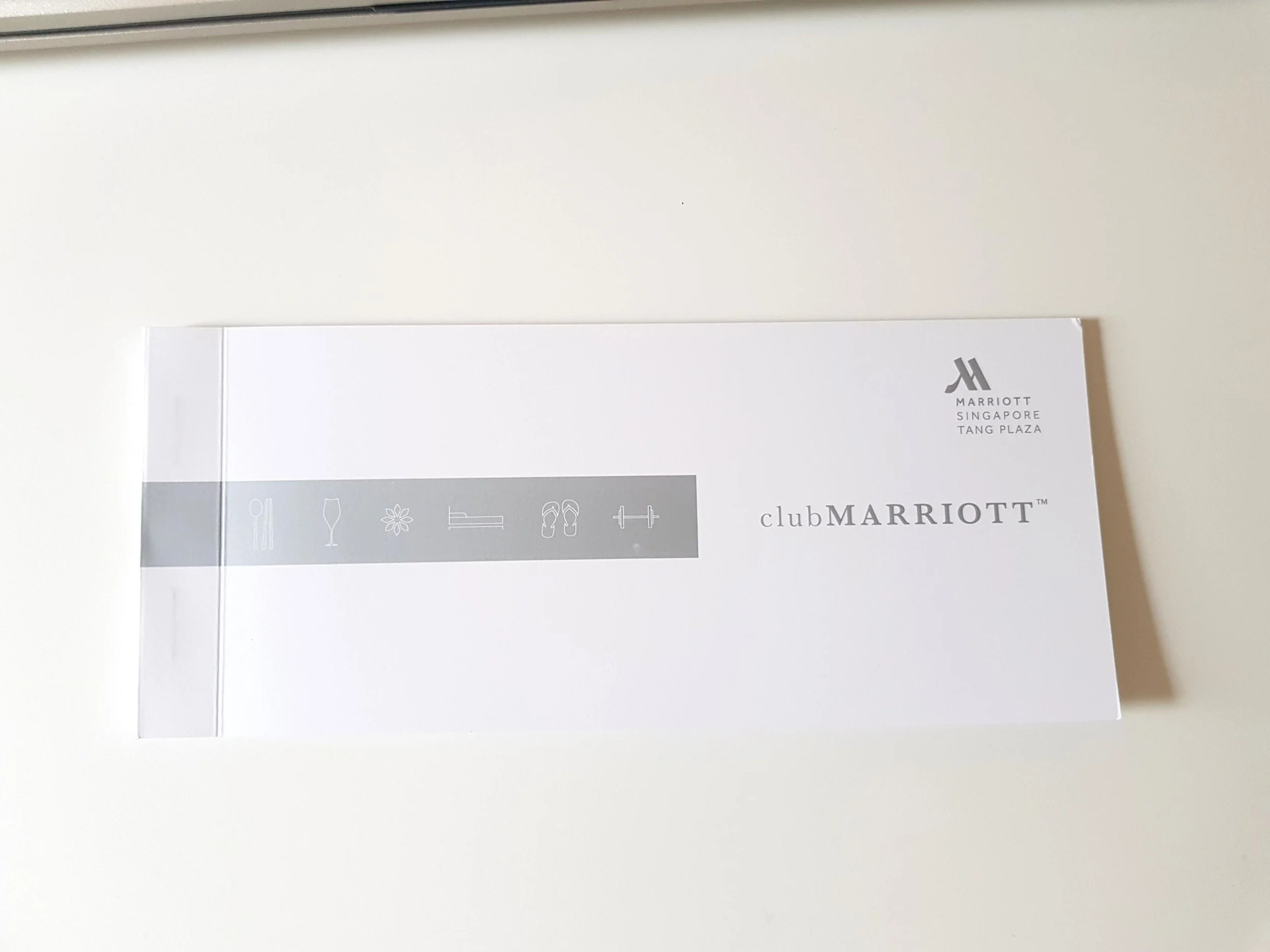
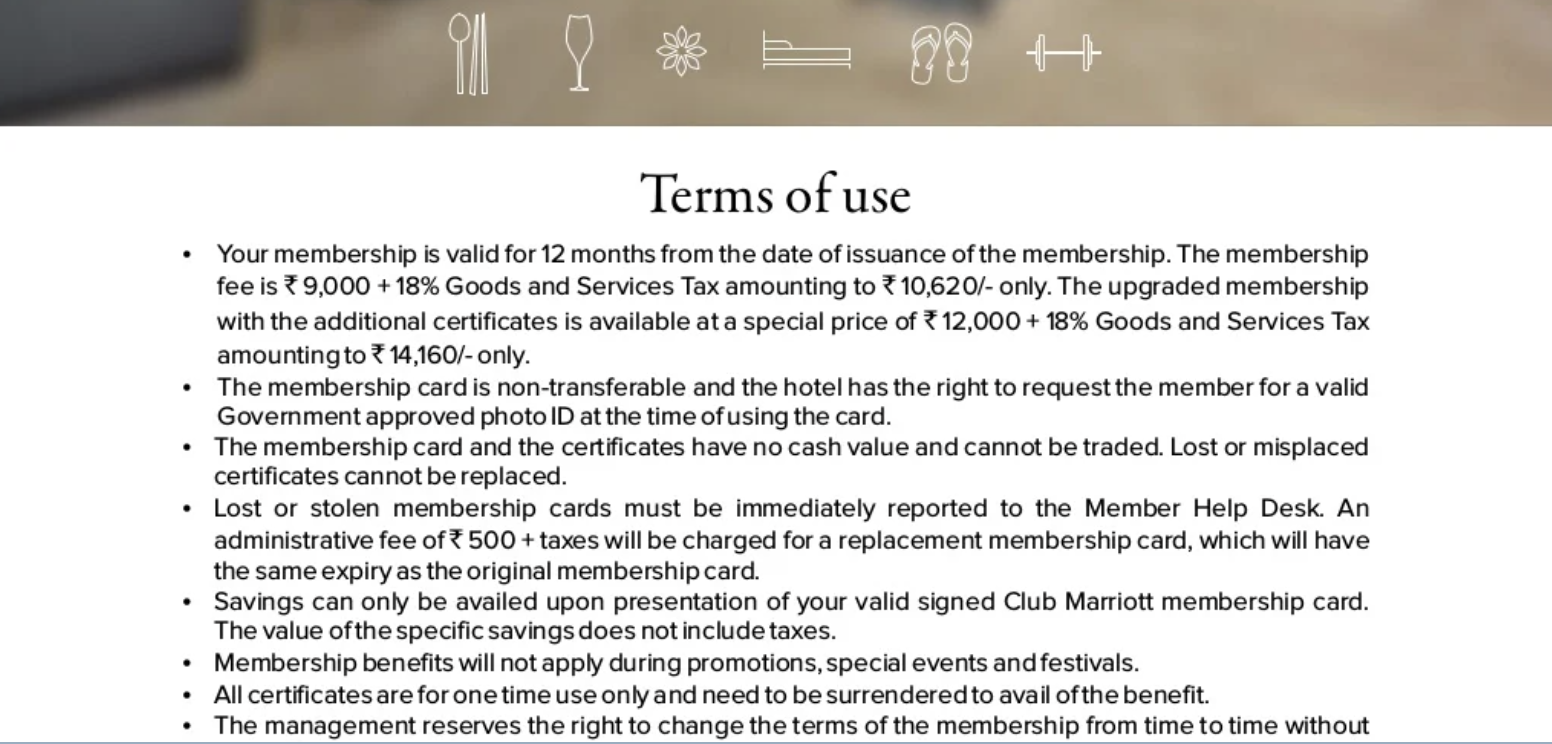
🏷 Dependency on physical booklets
The legitimacy of any offer or benefit was defined by having the booklet on hand, even if the member had their physical card
🥴 Complicated and restrictive terms & conditions
The member was required to go through an exhaustive list of terms & conditions to even use one of their coupons
📇 Onboarding new members was a long-drawn-out process
The user awareness + sale + onboarding was a complicated process that involved physical and digital touchpoints throughout the journey

The Research
Our approach was to first understand the experience of the existing members with parts of the loyalty programme along with mapping it’s service journeys. to understand how the membership programme functioned and identify opportunity areas to add value.
Stakeholder Research
We spoke to individuals throughout the client’s organisation, understanding their objectives, motivations, SOPs and Goals. We wanted to understand what these stakeholders expected to gain from the digitisation of the service.
Member Interviews
We spoke to three users ensuring enough diversity (long term member, short term member, and a member’s spouse). We also mapped three different stages within the membership journeys; from awareness and purchase, to usage and renewal.
12 month Customer touch-point mapping
We identified multiple points during a customer’s membership when TLC can engage with them to to provide a holistic service experience. These communications span across emailers (which have usage limitations defined by the hotel), Whatsapp messages sent by TLC, push and in-app notifications.
Journey Mapping
Mapping the three stages within this journey allowed us to understand service model from the customer’s perspective and understand what their perceptions were. It also helped us map their pain-points, and information gaps.
Mapping Mobile App Flows
We identified various pain points on the customer and hotel’s end, and combined their solutions with other opportunities to create a comprehensive flow for reservation and offer redemption, which were the core membership features.
😵💫 Pain points
Customers
Prefer to make offline reservations ( mostly walk-in)
Confusion caused due to extensive listing of T&C
Forget to carry vouchers
POS
Difficulty delivering services due to non-reservation
(Eg. Preparing birthday cake)
Compromised hospitality experience due to confusion relating to T&C
⭐️ Design Interventions
Customers
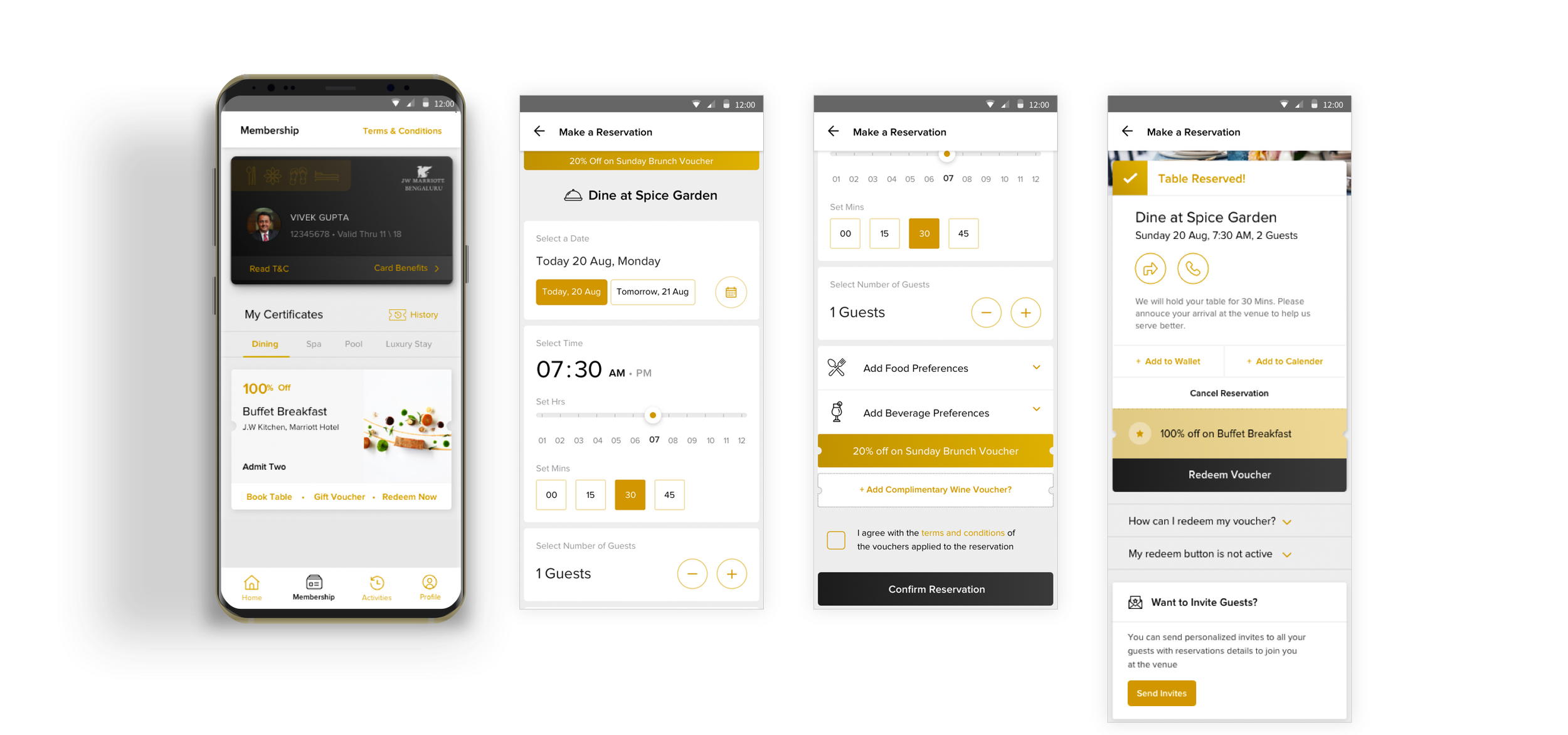
Seamless reservation process considering limitations of a selected voucher
Easy voucher selection with recommendations related to service
Personalised service using preference capture, location services
Constant feedback with reminders, updates, confirmation details etc.
Provide a voucher-centric as well as service-centric approach
TLC
Potential lead generations with guest invites for reservation
User feedback data at touch points to provide personalized service (Eg. rating system)
Smart two factor authentication to ensure secure redemption
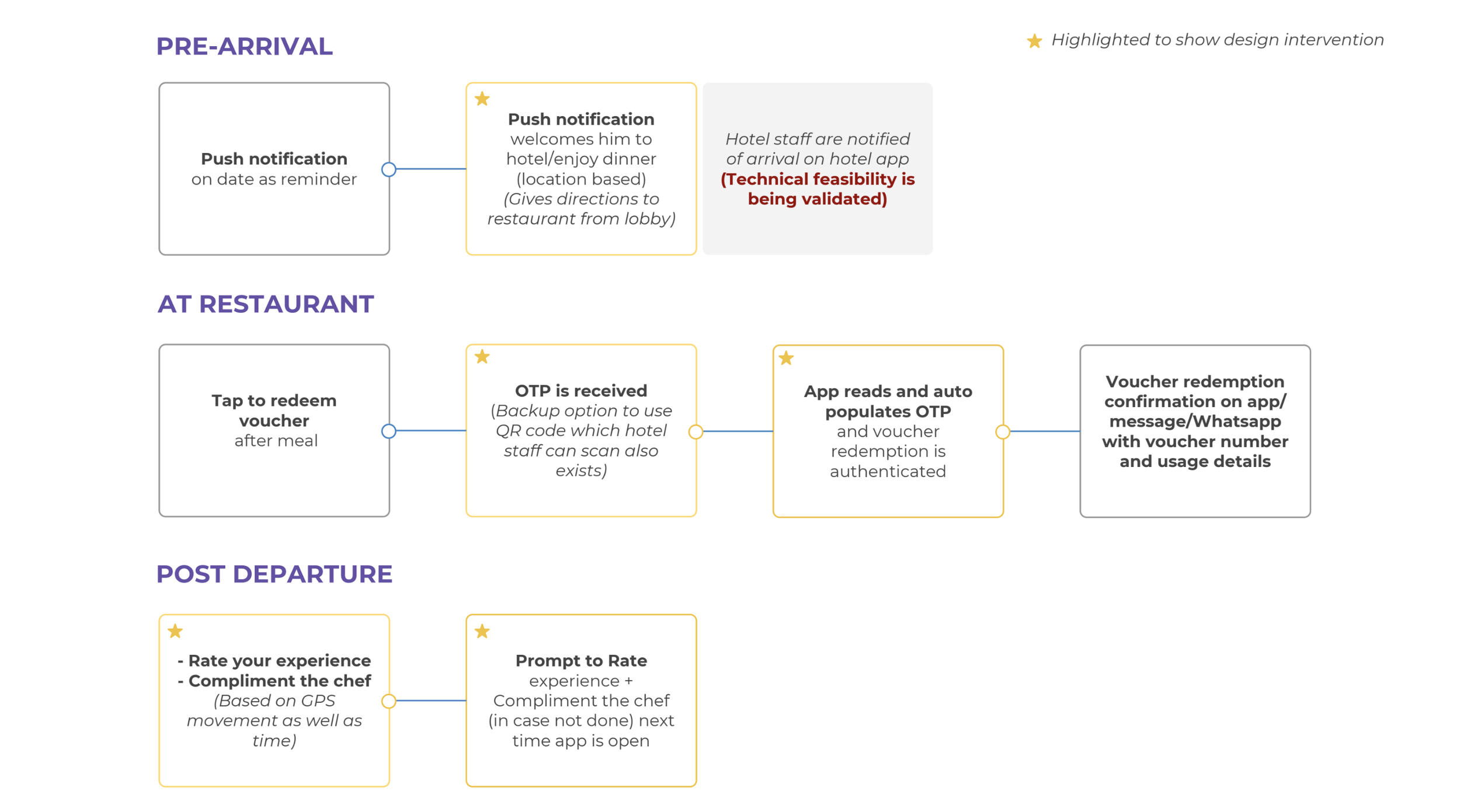
Example of a Mobile App Flow
In our ideation, we explored the concept of a Threat Hunting journey where the user would proactively go hunting for possible threats that don’t have a rule created yet.
This sparked an excellent collaborative session with the client-side teams to conceptually detail out the functionality and scale to an achievable MVP level for the first version, as it would mean writing new APIs that weren’t fitting into their timeline.
I proposed the possibility of combining the Alerts and Threat Hunting journeys since they were functionally quite similar and it also allowed the navigation to be a lot simpler. We decided to not go ahead with combining them based on two assumptions;
1. As this was a substantial redesign, having Threat Hunting as a primary navigation item would create more awareness of the functionality
2. Would reduce the cognitive load on the user
Defining The Design Themes
Based on pain points and opportunities that we have identified, navigate them into articulating larger narratives that drive the purpose of the app. Build ideas and collate them under these themes based on certain commonalities. These themes can be further translated into strong user-centred functions within the app
1. Harness digital opportunities to enrich member experience
Leverage technology to further enhance the member’s loyalty experience, to offer a contextual and customised membership experience.
2. A Customised Member Experience
Functionalities and options available in the app should be tuned to the member’s preferences so as to digitally emulate a hotel concierge.
3. Seamless translation of voucher content
The app’s functionality should reflect these functional conditions to avoid the benefits to be perceived as restrictive and rather communicate them for what they are.
4. Enhancing the Guest Customer Experience
Creating a pre-sales experience of the app for the guests that the member chooses to invite to the Hotel. This in turn helps create a Hot Lead (the Guest) for the hotel.
INFORMATION ARCHITECTURE
The objective of the Information Architecture was to enable discovery of services and organise the activities and additional membership features.
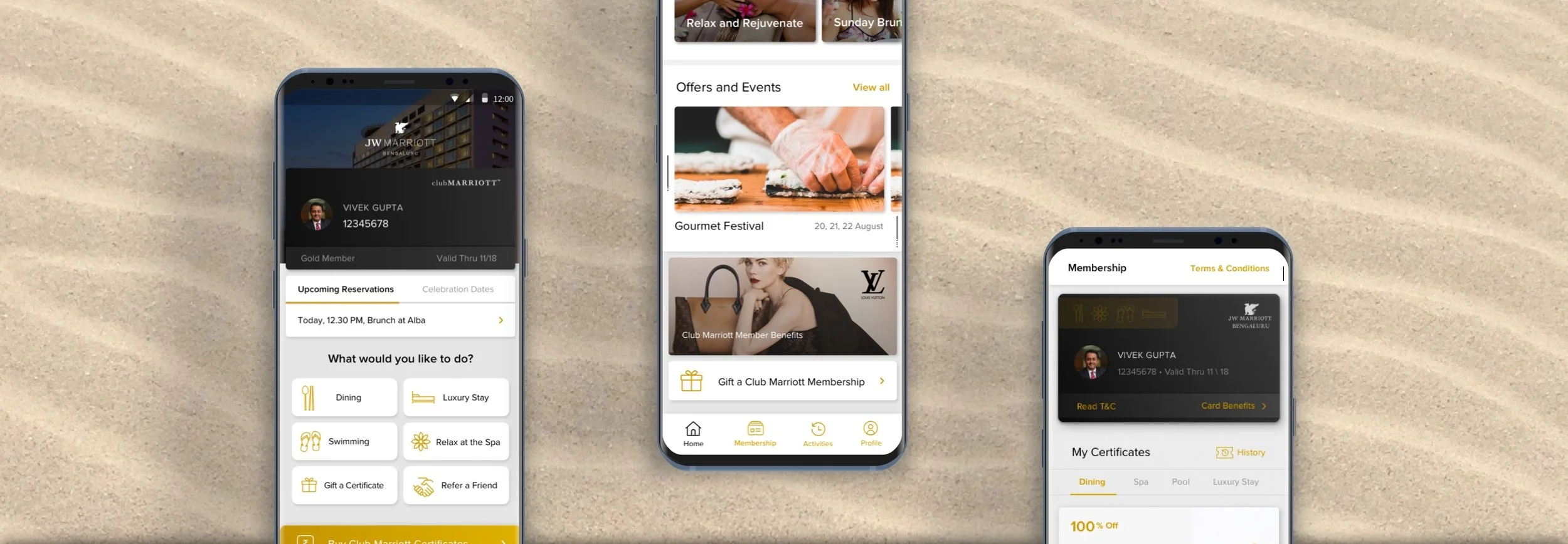
The long scroll home page consisted of a customised and contextual view relevant to the member. A Membership view allowed the member to see the the digital vouchers that were available to them and how they could initiate the redemption of those vouchers from that page. The architecture allowed for customised views as well as a scalable membership experience.
FINAL DESIGN OUTCOME
The app was planned to be a white-labeled application that can be customised for loyalty programs of various hotels, so it’s design system had to ensure that it could be highly adaptable to the hotel’s brand guidelines.
Components such as colours, fonts, icons and imagery could be customised as per individual hotels and in line with their brand standards.
The Home Page was a personalised view of what the hotel had to offer to the member. Based on the user preferences, various collections of services could be bundled together to be redeemed. The first fold also showcased the membership card always available on view, along with any upcoming events or reservations on the agenda. It clearly highlights all the available services that the member can redeem.
Reports View
FINAL DESIGN OUTCOME: SERVICE/VOUCHER REDEMPTION EXPERIENCE
In our research, we learnt that most members were unhappy while redeeming certificates because they carried too many terms & conditions. The fine print took away the joy of just enjoying the experience of a meal or a spa.
One of the core pillars of our design strategy was to convert these limitations into clear functions. Thus ensuring that the user redeems the certificates being aware of its limitations if any.
We also enabled the booking experience to capture preferences wherever possible. Upon completion of the journey, we added an option to invite guests. This option (and another one to give a certificate) enabled the guest to get a preview of the membership experience thereby creating a business lead for the sales team.